
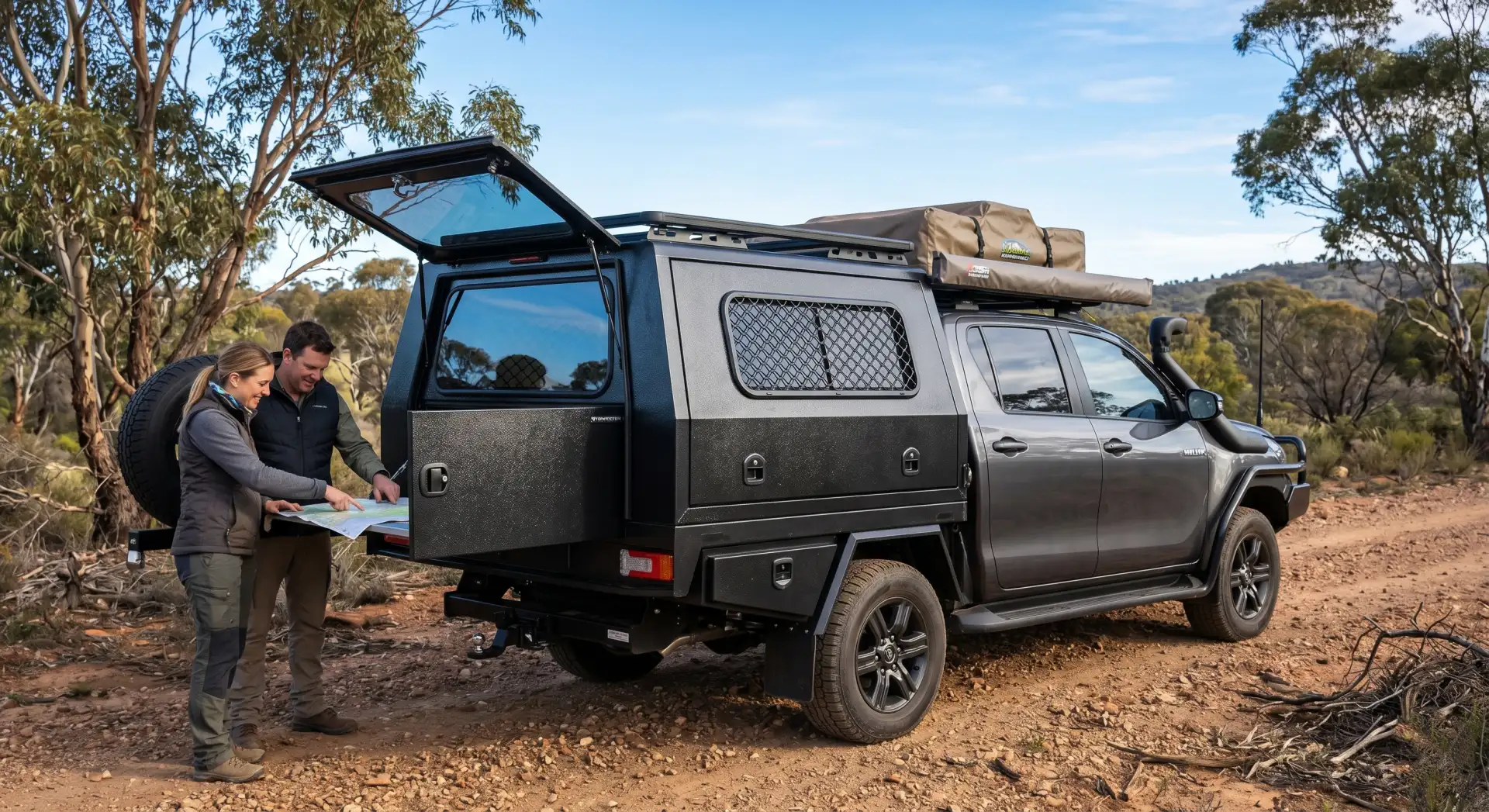
A solid ute canopy electrical setup turns your ute from a tool carrier into a proper mobile workstation. Whether you're running LED strip lighting, a 12V fridge, power tool chargers, or a UHF radio, the right setup means your gear works on the job site, out bush, or anywhere in between.
But wire it up without a plan, and you're looking at blown fuses, a dead starter battery, or voltage drop that leaves your fridge running warm. Here's what you need to know before you start.
Key Takeaways
- Most utes need a dual battery system to run accessories without risking the starter battery
- Modern utes with smart alternators require a DC-DC charger. A simple isolator won't cut it
- Lithium (LiFePO4) batteries are the better long-term choice for trade use
- Solar is a smart addition, especially when the ute sits parked all day
- Plan your load first, as that determines everything else
What Are You Running?
Before you buy a single component, write down everything you want powered in your ute canopy. Common setups for tradies include:
- LED work lighting (interior and exterior)
- 12V fridge or cooler
- USB and 12V charging ports for phones, tablets, and small tools
- Air compressor (12V)
- UHF radio
- Power inverter (for 240V tools or laptop charging)
Each item draws a different load. Add them up, and you know what battery capacity and charging input you need. Without this step you'll either underspecify the system or waste money going overkill.
Dual Battery Systems: Why You Need One
Most ute canopy 12V setups use a dual-battery system. One battery to start the vehicle and a second dedicated to powering accessories. This stops you from accidentally flattening your starter battery while the canopy is in use.
Installing the auxiliary battery in the canopy opens up your battery chemistry options since you're not limited by batteries that need to withstand engine heat, making a canopy installation ideal for lithium.
AGM vs Lithium
- AGM: Lower upfront cost, but heavier, slower to charge, and shallower usable capacity (typically 50% depth of discharge before damage)
- Lithium (LiFePO4): Lighter, charges faster, and handles deep discharge without the wear. Better value over a full working life if you're running gear every day
For most tradies running a fridge, plus lighting, plus charging, lithium is worth the investment. You'll recoup the cost in battery longevity alone.
The DC-DC Charger: Non-Negotiable on Modern Utes
This is the part most people get wrong. Without a DC-DC charger, your smart alternator will only measure the state of charge of your starter battery. When the starter battery is fully charged, a smart alternator reduces its output voltage, preventing auxiliary batteries from charging properly.
Smart alternators started appearing in mainstream models around 2010 and are now standard across virtually every popular ute on the market, including Ford Ranger, Toyota HiLux, Isuzu D-MAX, Mitsubishi Triton, and more. If you're running a modern ute with a smart alternator, a DC-DC charger is a must.
A DC-DC charger takes alternator output and converts it to the correct voltage profile for your auxiliary battery type, whether that's AGM or lithium. It also doubles as the connection point for solar input on most modern units.
What size DC-DC charger do you need?
- 20A is fine for lighter setups (lighting, phone charging, small fridge)
- 40A suits heavier draws (larger fridge, inverter, compressor)
- Match it to your battery capacity and daily usage
Adding Solar to Your Ute Canopy 12V Setup
Solar is one of the best additions to a ute canopy 12V setup, particularly if your ute sits on-site all day while you work. It keeps your auxiliary battery topped up without touching the alternator.
For tradies, solar keeps your gear powered even when the ute's off. Most recommendations land at a minimum of 200W if you're running a fridge and lights.
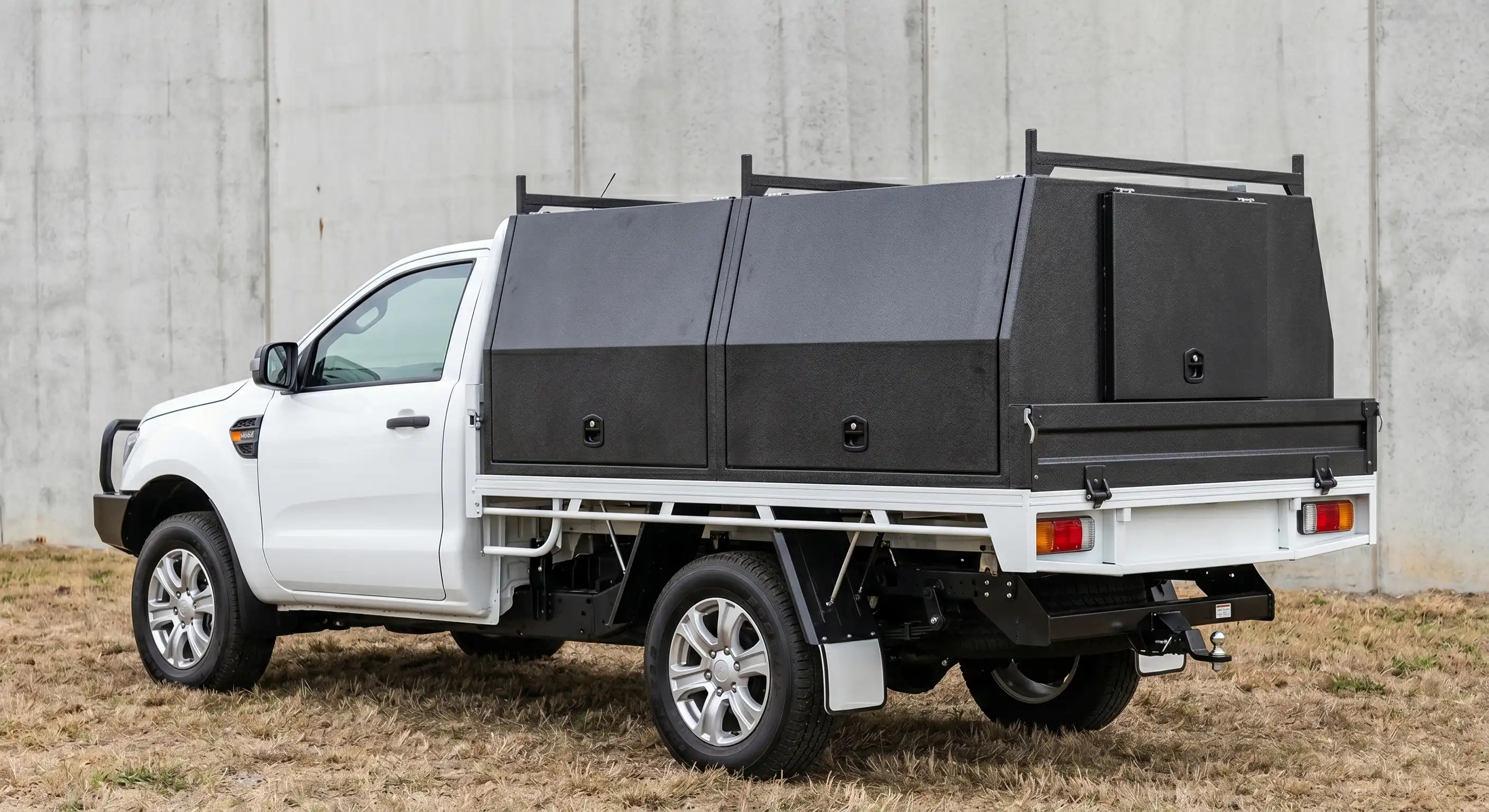
Rooftop panels mount flat on most gullwing canopies and standard ute canopies without drama. Run the cables through a weatherproof entry gland into the canopy, connect to the MPPT input on your DC-DC charger, and you've got a dual-input charging system. Use the alternator when driving, and solar when parked.
Wiring It Up Properly
Sloppy wiring is how electrical fires start. A few non-negotiables:
- Fuse protection close to the battery. Every circuit needs its own fuse, sized to protect the cable, not just the appliance
- Correct cable gauge. Bigger is better when it comes to wiring. A 50A 6mm wire with a run of no more than 5–6 metres can minimise voltage drop, especially for essentials like powering your fridge.
- Anderson plug for the main connection between the vehicle and canopy. It’s reliable under vibration and easy to disconnect when needed
- 12V sockets, USB ports, and a distribution board inside the canopy walls or integrated into ute drawers for clean, accessible connections
If you're not confident with auto-electrical work, get a licensed auto electrician to do the install. The components aren't cheap, and a bad connection can damage gear or worse.
What Can You Run Off a 12V Inverter?
If you need 240V power in the canopy, a pure sine wave inverter is the way to go. A pure sine wave inverter lets you plug in and power all your 240V accessories.
Size the inverter to your largest single load and ensure your battery bank can support it. A 1,000W inverter pulling from a single 100Ah lithium battery won't last long, so plan your capacity accordingly.
Limitations to Know Before You Start
- Canopy space: batteries, chargers, and wiring take up room. Factor this into your ute toolboxes and drawer layout before you commit to a battery size
- Solar in shade: panels need direct sunlight. If your ute parks under trees or in a covered depot, solar input will be minimal
- Alternator load: a DC-DC charger does add some load to your alternator. Most modern alternators handle it fine, but it's worth knowing
- Professional install for high-draw systems: if you're running a large inverter or multiple high-draw appliances, get a qualified auto electrician involved
Building a Proper Canopy Setup Starts With the Right Base
A well-planned ute canopy electrical setup will serve you reliably for years. Get the battery chemistry right, use a DC-DC charger, add solar if the ute sits parked during the day, and wire everything properly with correct cable sizing and fusing.
Tools in a Box builds quality ute canopies and ute accessories designed to work with real-world tradie setups, with the space and structure to house a proper electrical system. Browse the full range to find the right base for your build.