
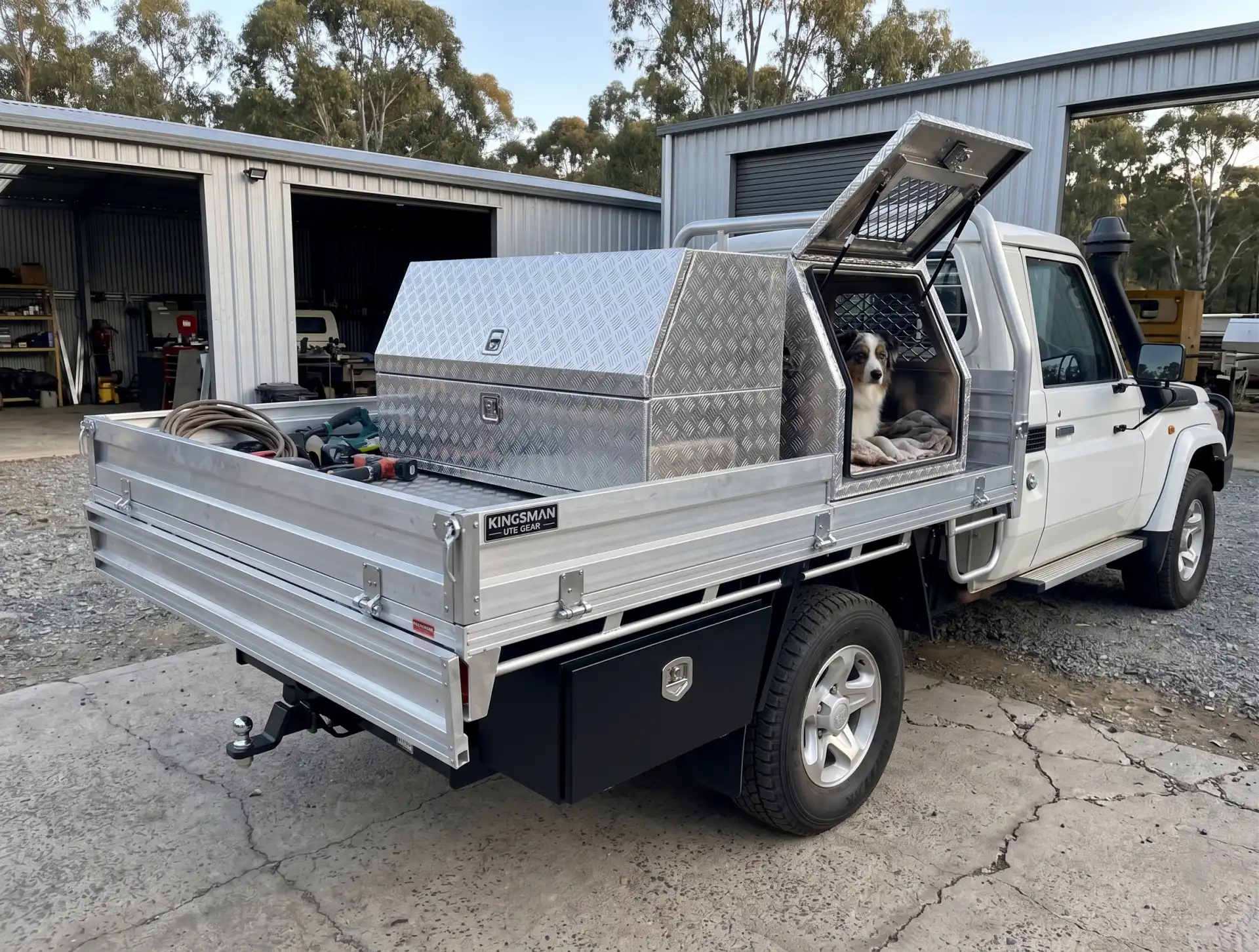
Your ute's payload capacity is a legal limit. Load past it, and you're looking at fines, voided insurance, and a vehicle that handles like a barge. For tradies running toolboxes, canopies, and a tray full of gear, understanding where your weight budget goes is non-negotiable.
Here's what you need to know.
Quick Answer
- GVM is the maximum your fully loaded ute can legally weigh. Find it on your compliance plate
- Payload = GVM minus your ute's kerb weight. This is what you have left for everything else
- Accessories like toolboxes, canopies, and bull bars all eat into your payload before you load a single tool
- Aluminium toolboxes and undertray boxes save significant weight compared to steel
- Most dual-cab utes have a real-world usable payload of 500–800 kg once accessories are fitted
What Is GVM and Why Does It Matter?
GVM (Gross Vehicle Mass) is the maximum your loaded vehicle can legally weigh on the road. It covers the vehicle itself, fuel, passengers, accessories, and everything in the tray. The manufacturer sets this limit based on the vehicle's structural capacity, brakes, suspension, and chassis strength. You'll find it on the compliance plate, usually on the chassis rail or driver's door jamb.
Exceed it, and you're breaking the law. Overloading affects braking distance, handling, and puts excessive stress on components that weren't designed for that weight. And if you're in an accident while overloaded, your insurer won’t pay up.
What Is Ute Payload Capacity?
Payload is the weight you have available to play with for passengers, tools, materials, and every accessory bolted to the vehicle.
To find your available payload, subtract the kerb weight of the vehicle (the ute with no body, no passengers, and a full tank of fuel) from the GVM. What is left is your true available payload for tools and materials.
There's a catch, though. Tare is measured with only 10 litres of fuel, while kerb weight assumes a full tank. On a ute with an 80-litre tank, that difference alone is around 58 kg. The compliance plate payload figure is calculated from the tare weight, which makes it appear more generous than it really is. By the time you fill the tank to drive off the dealer's lot, you've already used 58 kg of your payload budget.
Factor that in from day one.
How Your Toolbox Setup Impacts Ute Payload Capacity
This is where most tradies get caught out. Every accessory you bolt on reduces the payload left for actual work gear.
A ute with a GVM of 3,000 kg and a kerb weight of 2,000 kg has a total payload of 1,000 kg. Add a 100 kg tray, a 50 kg canopy, and 150 kg of tools, and your remaining legal payload drops to 700 kg. Add a second passenger and fuel, and you're tighter still.
Here's a realistic breakdown of what common ute accessories weigh:
- Steel tray: 120–180 kg
- Aluminium tray: 60–100 kg
- Full aluminium canopy: 110–175 kg (depending on size)
- Underbody/undertray toolboxes: 15–35 kg each
- Side-mount toolboxes: 20–40 kg
- Bull bar: 30–60 kg
- Drawer system: 40–80 kg
- Second battery and mount: 20–30 kg
- Roof rack or ladder rack: 15–30 kg
Add two passengers (say 160 kg combined) and 80 litres of fuel (~58 kg), and a well-kitted trade ute can carry 600–700 kg in accessories and people before a single tool goes in the tray.
If your remaining payload on a trade vehicle is under 400 kg, you're already tight. If it's under 300 kg, you're almost certainly going to exceed GVM on a normal working day.
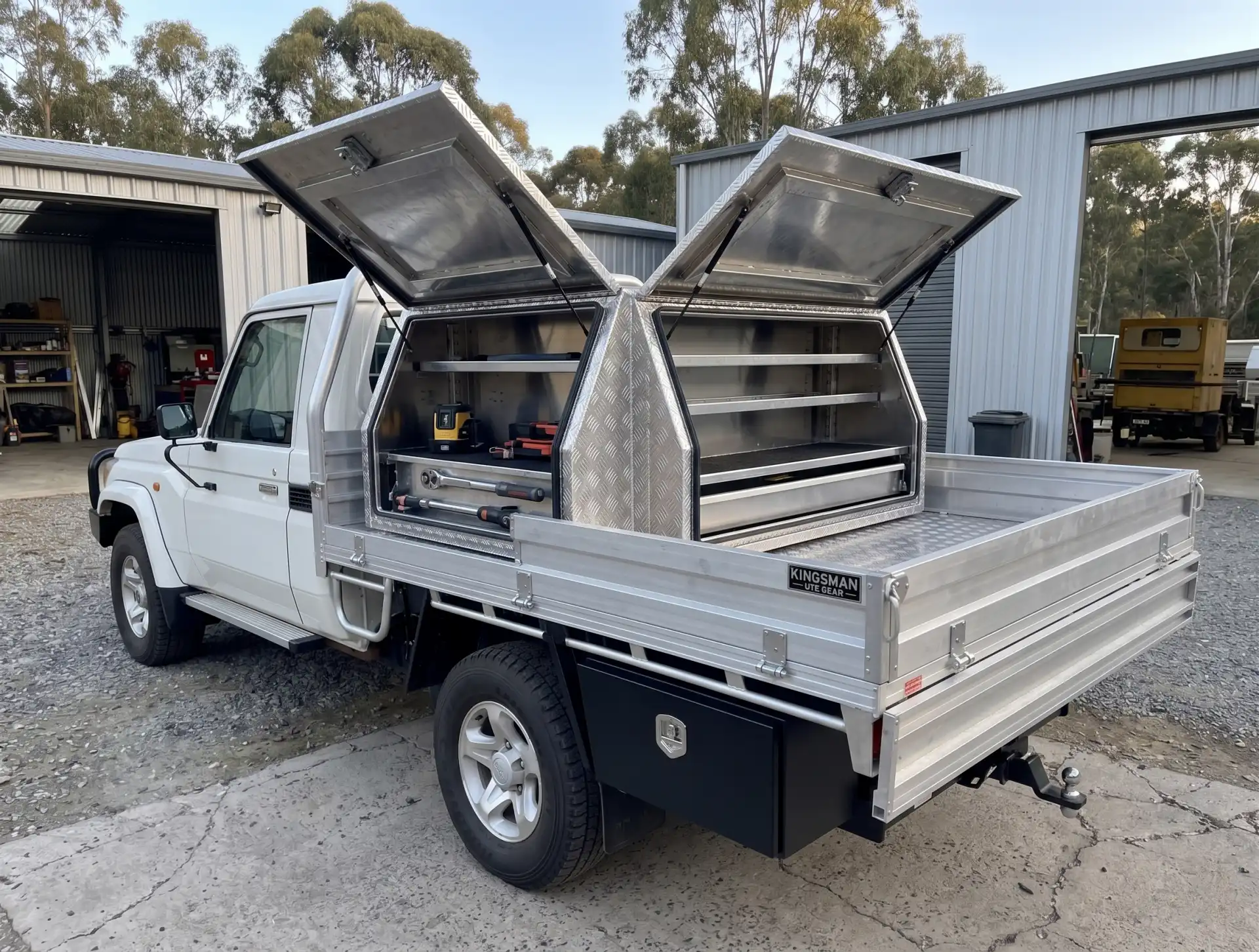
How to Set Up Your Ute Toolbox Without Killing Your Payload
Getting the most out of your ute comes down to choosing accessories that do the job without carrying unnecessary weight. Here's how to approach it:
1. Start with your compliance plate
Find your GVM and subtract your vehicle's kerb weight. That's your baseline payload. Now subtract every accessory you're planning to fit, including trays, canopies, toolboxes, and bull bars.
2. Choose aluminium over steel wherever possible
Aluminium ute toolboxes can save you 30–50% in weight compared to equivalent steel units. The same logic applies to trays and ute canopies. An aluminium canopy will typically save 30–50 kg over a steel one.
3. Consider undertray storage
Aluminium under tray toolboxes mount beneath the tray floor, using space that's otherwise wasted. They're typically lighter than full side-mount boxes and keep your tray clear for bulkier materials. See our guide on how to mount an undertray toolbox if you're fitting them yourself.
4. Only carry what you need on-site
It sounds obvious, but many tradies haul the entire workshop every day. Keep your daily kit lean and leave the gear you only need once a fortnight in the shed.
5. Aim for a buffer
Aim for 10–20% below your maximum ratings. It keeps you legal, keeps the insurer onside, and leaves room for the gear you always forget to account for.
Signs Your Ute Is Overloaded
If you haven't done the maths, these are the warning signs to watch for:
- The rear suspension sits noticeably lower than normal
- Steering feels vague or light at the front
- Braking distance increases, especially on a loaded tray
- Tyres show unusual or accelerated wear on the inside edges
- The ute feels "floaty" or hard to control at highway speeds
Any of these signs means it's time to get on a weigh bridge and run your numbers properly.
What Happens If You're Over the Limit?
The manufacturer sets GVM, the law enforces it, and your insurance policy depends on it. Getting caught overloaded is a potential insurance write-off if you have an accident. In New South Wales, overloading penalties apply to both the driver and the operator, and they scale with the degree of overloading. Other states have similar tiered penalty structures.
Beyond the legal risk, consistently running over GVM accelerates wear on brakes, suspension, chassis components, and tyres, which add up fast on a working ute.
Lighter Gear Without The Compromise
If you're setting up a trade ute and want to maximise payload without compromising on storage,Tools in a Box's range of aluminium toolboxes is worth a look. Lightweight, tough, and built for working conditions, they're designed so you can carry what you need without eating into your legal weight limit.
Always check your vehicle's compliance plate and owner's manual for the manufacturer-specified GVM. If in doubt, consult a licensed vehicle modifier or engineer before fitting accessories.